Plastic Tariffs and the Growing Importance of Canadian Recycled Plastics
The North American plastics industry is facing increasing uncertainty as U.S. tariffs, changing trade policies and cross-border supply chain costs continue to affect manufacturers. For Canadian companies that rely heavily on imported virgin plastic, these changes can create significant challenges in material pricing, availability and supply.
This makes plastic sourcing more important than ever.
Canada's Dependence on U.S. Virgin Plastic
Canada's plastics industry is highly integrated with the United States, particularly when it comes to virgin polyethylene and polypropylene resin.
In 2024, approximately 93.6% of Canada's imported polypropylene came from the United States. For polyethylene, the dependence was similarly high, with approximately 94.8% of Canadian imports of polyethylene below a density of 0.94 originating in the U.S. World Bank WITS World Bank WITS
This level of dependence means that plastic tariffs and changes to Canada-U.S. trade policy can have a direct impact on Canadian manufacturers. Plastic News reported that $3B in plastics were caught up in the new US 50% Tariffs on Canada. Plastic News
When the cost of virgin resin increases, manufacturers can face higher production costs. When transportation or trade conditions change, sourcing can become more difficult and less predictable.
The Problem With Relying Entirely on Virgin Resin
Virgin plastic remains an important material for manufacturing, but relying exclusively on virgin resin creates exposure to factors manufacturers cannot control.
These include:
- U.S. plastic tariffs and trade policy
- Virgin resin commodity prices
- Cross-border transportation costs
- Supply disruptions
- International oil and energy prices
- Exchange-rate fluctuations
For Canadian manufacturers, diversifying their material supply can provide another way to manage these risks.
Canadian Recycled Plastic Provides an Alternative
Recycled plastic can provide manufacturers with another source of material while reducing dependence on virgin resin.
Instead of importing virgin material, Canadian manufacturers can use Canadian-sourced and Canadian-processed recycled plastics where the material meets their application requirements.
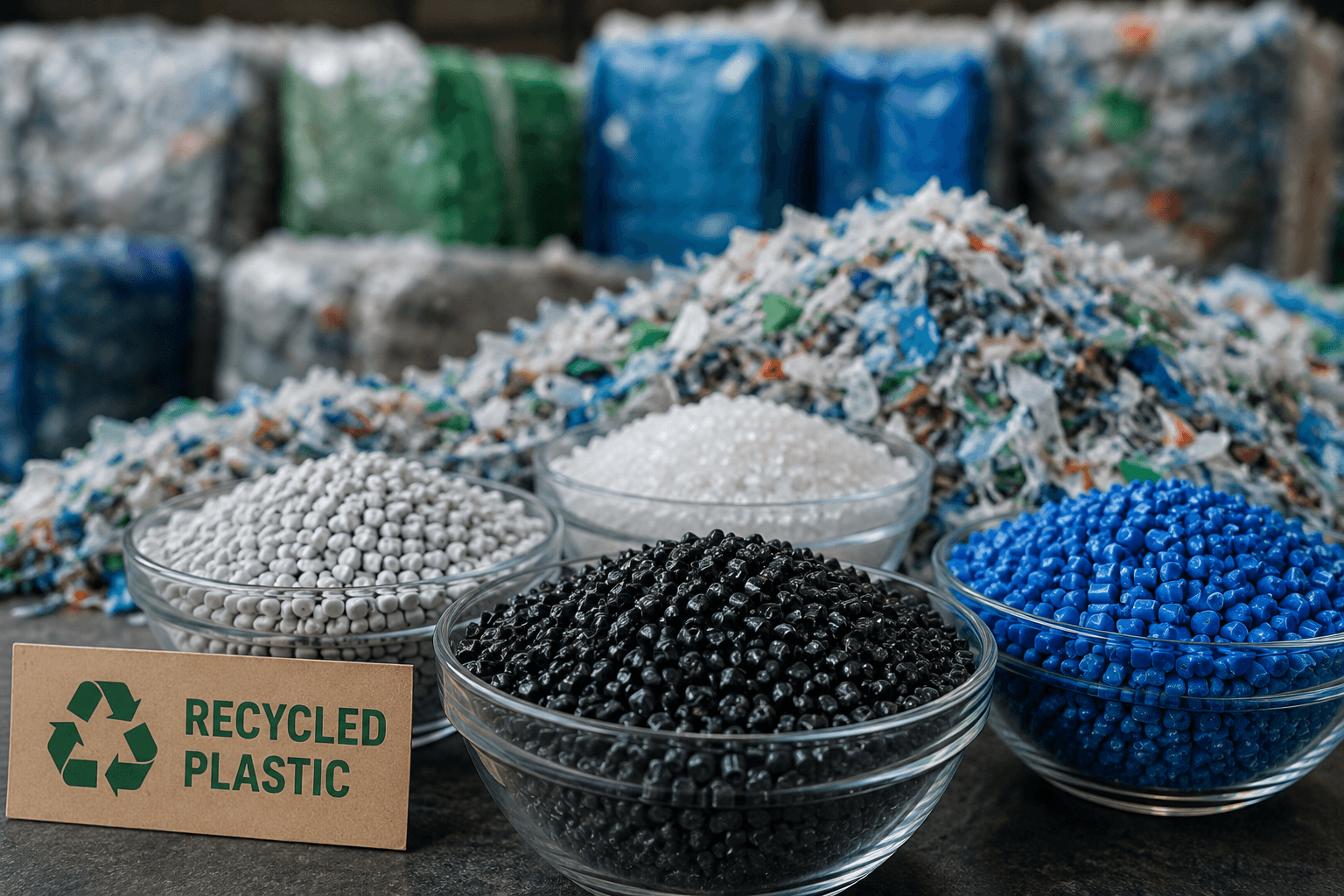
Recycled polyethylene, polypropylene and other plastics can be processed into regrind, pellets and custom blends for use in manufacturing.
This can provide several advantages:
Reduced Exposure to Virgin Resin Prices
Using recycled material can reduce the amount of virgin plastic required for production, helping manufacturers manage exposure to virgin resin price fluctuations.
More Domestic Sourcing
Canadian recycled plastic can provide a source of material that does not rely on importing virgin resin across the Canada-U.S. border.
That can reduce exposure to plastic tariffs, transportation costs and cross-border supply chain disruptions.
Lower Material Waste
Recycling manufacturing scrap turns material that might otherwise become waste into a usable resource.
Instead of:
Virgin Plastic → Manufacturing → Waste
manufacturers can create a more circular supply chain:
Virgin + Recycled Plastic → Manufacturing → Recovered Plastic → Reprocessed Material
A More Resilient Supply Chain
Using recycled material does not mean eliminating virgin plastic.
For many manufacturers, the best solution is a combination of virgin and recycled materials based on the performance requirements of the finished product.
This gives manufacturers another sourcing option when virgin resin prices rise or international supply becomes uncertain.
EPL Plastics: Helping Canadian Manufacturers Source Recycled Plastic
At EPL Plastics, we help manufacturers recover and reprocess industrial plastic into usable materials.
Through plastic recycling, grinding, reprocessing, blending and material sourcing, EPL helps turn manufacturing scrap into a resource that can return to the supply chain.
For Canadian manufacturers facing plastic tariffs, rising virgin resin costs or supply-chain uncertainty, Canadian recycled plastic can be more than a sustainability initiative.
It can be a practical plastic sourcing strategy.
By recovering more material locally and reducing reliance on imported virgin resin, manufacturers can build a more flexible and resilient supply chain.
Reduce Your Reliance on Virgin Plastic
If your company is looking for ways to reduce plastic waste, source recycled polyethylene, polypropylene and other manufacturing plastics, or protect your operation from changing resin and tariff conditions, EPL Plastics can help.
Contact EPL Plastics to explore Canadian recycled plastic and material sourcing solutions for your operation.
Sources
-
World Bank World Integrated Trade Solution (WITS) — Canada polypropylene imports, 2024: World Bank WITS – Canada polypropylene imports, 2024
-
World Bank World Integrated Trade Solution (WITS) — Canada polyethylene imports, 2024: World Bank WITS – Canada polyethylene imports, 2024
-
Plastics Industry Association — Analysis of Canada-U.S. plastics trade and tariff exposure: PLASTICS Industry Association – Tariffs on Mexico, Canada and China