Building a More Reliable Manufacturing Supply Chain with Toll-Processed Recycled Plastics
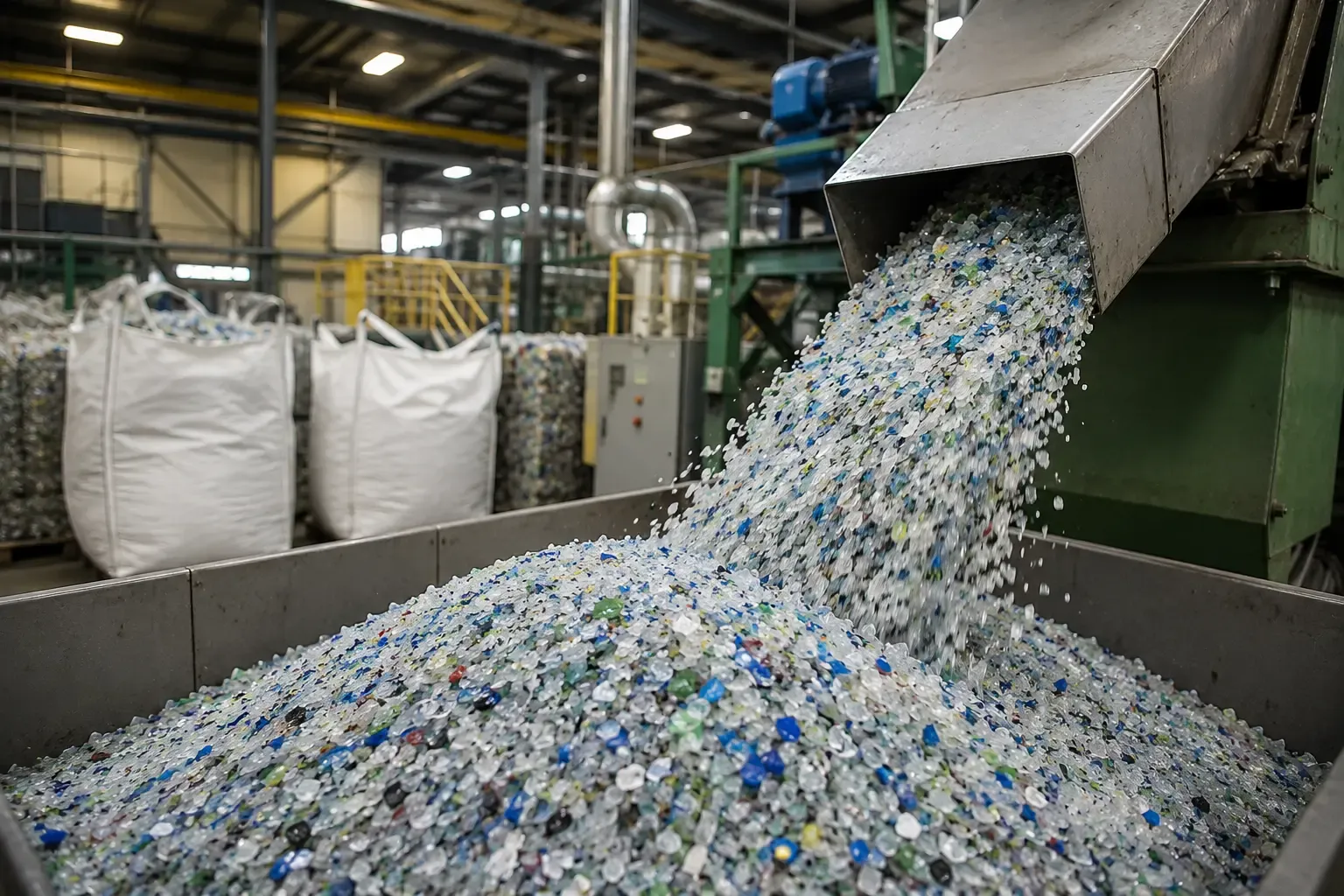
Manufacturers are navigating an increasingly uncertain global economy. Tariffs, changing trade policies, volatile energy prices, transportation costs, and disruptions across international supply chains are making it harder to predict what materials will cost from one month to the next.
For manufacturers that depend on plastic materials, there is an often-overlooked source of stability: their own plastic waste.
Through plastic toll processing, manufacturers can turn post-industrial plastic scrap into reusable recycled materials while reducing their dependence on traditional plastic sourcing and volatile external markets.
Toll-Processed Recycled Materials: Boring, but Reliable
Purchasing toll-processed recycled plastic materials may not be the most exciting part of manufacturing. But in an unpredictable economy, reliability is a competitive advantage saving you time worrying about material sourcing that can be used on growing your business.
Unlike virgin plastic materials that are closely tied to global petrochemical markets and international trade Government of Canada, toll-processed recycled plastics can provide manufacturers with a more predictable source of material.
Your company already generates the raw material. Instead of treating plastic production scrap as waste, it can be collected, processed, and returned to your manufacturing operation as a usable recycled material.
EPL Plastics provides turnkey toll plastic processing services, including grinding, densifying, refining, blending, and other processing solutions designed to transform plastic scrap into materials that can be reused in manufacturing. Learn more about EPL Plastics toll processing services
This creates a more controlled plastic supply chain with fewer dependencies on external markets.
Less Exposure to Tariffs and Global Markets
International tariffs and trade restrictions can have a significant impact on the cost and availability of imported materials. Virgin plastic and polyethylene markets can be particularly exposed to global supply and demand, oil prices, transportation costs, and international trade policies.
Reprocessing your own plastic waste is different.
When your manufacturing scrap becomes a source of recycled material, you are creating a supply stream from a resource that already exists within your own operation. Toll processing recycled plastics can therefore reduce your exposure to some of the uncertainty associated with traditional plastic sourcing.
Oil prices can still have a secondary influence on recycled plastic economics through transportation, processing, and broader market pricing. However, recycled materials are not dependent on extracting new fossil resources in the same way virgin plastics are. OECD Back in May before many changes in global markets, Even S&P Global had research come out about how recycled polymers are now trading at a discount to virgin materials for the first time globally as buyers sought alternatives to increasingly expensive virgin PET. Read More
For manufacturers looking to diversify their material sourcing strategy, recycled plastics can provide another option alongside virgin resin and other externally sourced materials. EPL Plastics' material sourcing services include both virgin plastics and repurposed blends, helping manufacturers find materials suited to their performance and production requirements. Explore EPL Plastics material sourcing
Turn Your Plastic Waste Into a Supply-Chain Asset
For many manufacturers, plastic waste is already being generated every day. The opportunity is to turn that waste into a reliable material stream.
A successful recycled plastic program can involve:
- Collecting and separating production scrap
- Establishing consistent material specifications
- Granulating, shredding, or otherwise preparing the material
- Toll processing the material into the required form
- Returning processed recycled material to your manufacturing operation
- Tracking material quality and consistency over time
The difficult part is often not the recycling itself. It is building the system.
Material handling, contamination, logistics, storage, processing specifications, quality control, and employee processes all have to work together. This is where an experienced plastic recycling and toll processing partner can make the transition significantly easier.
EPL Plastics provides services beyond processing, including storage and handling, logistics and waste consulting, material sourcing, grinding, densifying, blending, compounding, pelletizing, and aspiration. See all EPL Plastics services
From Plastic Scrap to Reusable Material
The goal of a successful toll processing program isn't simply to recycle plastic. It is to create a usable material that can reliably return to the manufacturing process.
Depending on the material and application, plastic scrap can be ground, densified, blended, compounded, pelletized, or otherwise processed into a form suitable for reuse.
EPL Plastics' plastic repurposing services are designed to transform post-industrial plastic scrap into reusable materials, including polypropylene (PP), polyethylene (PE), polystyrene (PS), and custom recycled blends. Learn about plastic repurposing at EPL Plastics
This approach can help manufacturers reduce waste while recovering value from material they have already purchased.
Why Supply-Chain Reliability Matters
Supply-chain resilience isn't necessarily about eliminating every external dependency. It is about having more control over the materials and processes that are critical to your operation.
A manufacturer that sends production scrap to landfill and purchases all of its required plastic resin from external suppliers has limited control over both sides of that equation.
A manufacturer that recovers its own plastic waste has another option.
Instead of:
Production → Plastic Scrap → Disposal → Purchase New Material
a toll processing program can create a closed-loop approach:
Production → Plastic Scrap → Toll Processing → Recycled Material → Production
That doesn't eliminate the need for virgin resin or external suppliers. But it can create an additional, more predictable source of material while reducing the amount of valuable plastic leaving the facility as waste.
EPL Plastics: Experience That Helps You Get It Right
EPL Plastics works with manufacturers to turn industrial plastic waste into reusable materials through recycling, toll processing, material sourcing, and related services.
The company supports manufacturers across North America and operates a range of processing capabilities, including grinding, densifying, compounding, pelletizing, and other material processing technologies. EPL's approach is designed to manage the process from incoming plastic waste through processing and quality assurance to finished recycled materials.
For manufacturers, that means the objective isn't simply to find someone who can process plastic.
The objective is to build a reliable system around that material.
Understanding the waste stream, establishing specifications, managing logistics, controlling contamination, processing material consistently, and returning it in a usable form are all important pieces of the equation.
Building a More Resilient Plastic Supply Chain
In a world where tariffs, oil prices, transportation costs, and global economic conditions can change quickly, manufacturers cannot control everything.
But they can control how much they depend on unpredictable external supply chains.
Reprocessing your company's plastic waste can turn an unavoidable manufacturing byproduct into a reliable source of recycled material.
For manufacturers interested in exploring whether toll processing could work for their plastic waste streams, EPL Plastics can help evaluate the material, processing requirements, and potential recycling opportunities.