Which Plastics Are Recyclable? A Straight Answer by Resin Type
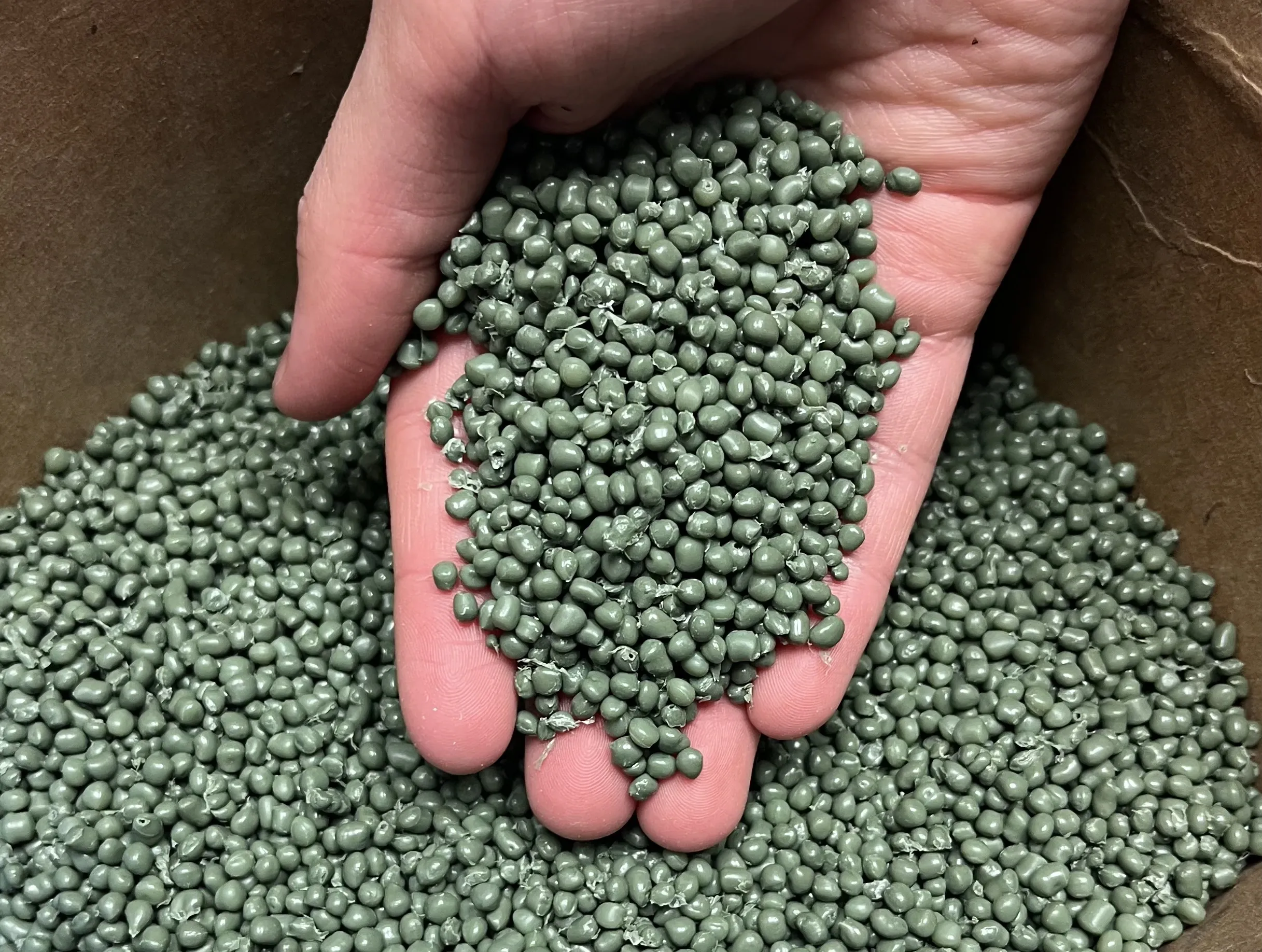
If you run a production line, you already know what resins you're working with. The question is usually simpler than the recycling debate makes it sound: which of these can we actually recycle, and is it worth recovering? Here's a straight answer, resin by resin, along with what to do when your waste is a mix.
The short version: the common industrial resins recover very well, especially as clean production scrap. When a stream is blended or you're not sure how it will process, that's a quick call to us rather than a guess.
The Easy Recyclables, No Questions Asked
These are the workhorse industrial plastics we handle every day. If your scrap is one of these, it's an easy recyclable, no questions asked, we'll take it:
- Polypropylene (PP), resin code 5: Tough and heat-resistant, common in containers, caps, automotive parts, and packaging. One of the most dependable resins to reprocess.
- Polyethylene (PE), resin codes 2 (HDPE) and 4 (LDPE): Strong and moisture-resistant, everywhere in film, piping, containers, and packaging. Holds its properties well through recycling.
- Polystyrene (PS), resin code 6: Lightweight and rigid, used across packaging and moulded products.
As clean regrind, purgings, off-spec runs, or production scrap, all three are exactly the kind of material we turn back into usable feedstock through grinding and granulating, blending and compounding, and toll processing. No back-and-forth, no uncertainty, these are a straight yes.
Other Resins
The remaining codes, PET (1), PVC (3), and the catch-all "Other" (7), are more situational. Some are recyclable depending on the exact material, grade, and volume, and others aren't a fit. If your stream is one of these, it's worth a conversation rather than an assumption, we'll tell you plainly whether we can take it.
What Recovers Best
Within the resins we take, the material that recycles most easily, and is worth the most, shares a few traits:
- A single, known resin rather than a mix.
- Clean and dry, without heavy contamination, additives, or coatings.
- Consistent and in volume, like the steady scrap a production run generates.
That describes most post-industrial plastic, which is why it recovers so much better than mixed post-consumer material (more on that here).
Mixed Streams: This Is Where Plastic Waste Consulting Comes In
The one place worth checking before you write anything off is a mixed or blended stream, a part that combines several resins, plastic bonded to another material, or a waste stream that isn't cleanly separated. These aren't automatic rejections. Depending on the makeup, we can often still process them, or advise on how to separate the stream so it recovers value instead of going to landfill.
This is exactly what our plastic waste consulting is built for. Plastic waste consulting means we assess your actual waste stream, identify what's recoverable, and map out how to separate, process, and reclaim value from material other recyclers would simply turn away. Instead of guessing whether a mixed load is garbage, you get a straight assessment of what it is and what it's worth.
We do this kind of work regularly. For an automotive parts manufacturer, our plastic waste consulting helped separate carpet material from the recyclable plastic in their sound deadening material, turning what looked like unrecyclable/in-efficient mixed scrap into a clean, recoverable resin. A stream that would have gone to landfill or recycled at a 15% rate, was transformed into a 85% recyclability product saving their bottom line and the environment. Case Study
So tell us what's in the mix. Plastic waste consulting exists precisely for the streams that aren't a simple yes, and it's how a lot of "unrecyclable" material turns out to be recyclable after all.
Not Sure? That's a Call, Not a Guess
If you've got a stream you've been unsure about, a blend, or a material you assumed was garbage, check before it goes to landfill. Worst case, we tell you it isn't a fit. Best case, you've been paying to dispose of something we'd happily take.
See what you're currently spending on landfill disposal with our Plastic Savings Calculator, then give EPL Plastics a call to find out what your material is worth. We work with manufacturers across Canada and the northern United States, and we're always glad to look at a tricky stream.
FAQ: Which Plastics Are Recyclable
Q: Which plastics does EPL Plastics recycle?
A: Our core industrial resins are Polypropylene (PP, code 5), Polyethylene (PE, codes 2 and 4), and Polystyrene (PS, code 6), especially as clean production scrap, regrind, purgings, and off-spec material.
Q: What about PET, PVC, or other resins?
A: PET (1), PVC (3), and "Other" (7) are more situational. Some are recyclable depending on the material and volume, and some aren't. Get in touch and we'll give you a straight answer for your specific stream.
Q: What kind of plastic waste recovers best?
A: A single known resin that's clean, dry, and generated consistently in volume, which describes most post-industrial plastic waste.
Q: What if my waste is a mixture of plastics?
A: Don't write it off. Mixed and blended streams are often still workable, or can be separated to recover value. Our plastic waste consulting exists for exactly this, contact us and we'll assess it.
Q: What is plastic waste consulting?
A: Plastic waste consulting is where we assess your waste stream, identify what's recoverable, and map out how to separate and process mixed or blended material to reclaim its value. It's how we handle streams that aren't a simple yes, like helping an automotive parts manufacturer separate carpet from recyclable plastic.