Why Consumer Plastic Is So Hard to Recycle, and Industrial Plastic Isn't
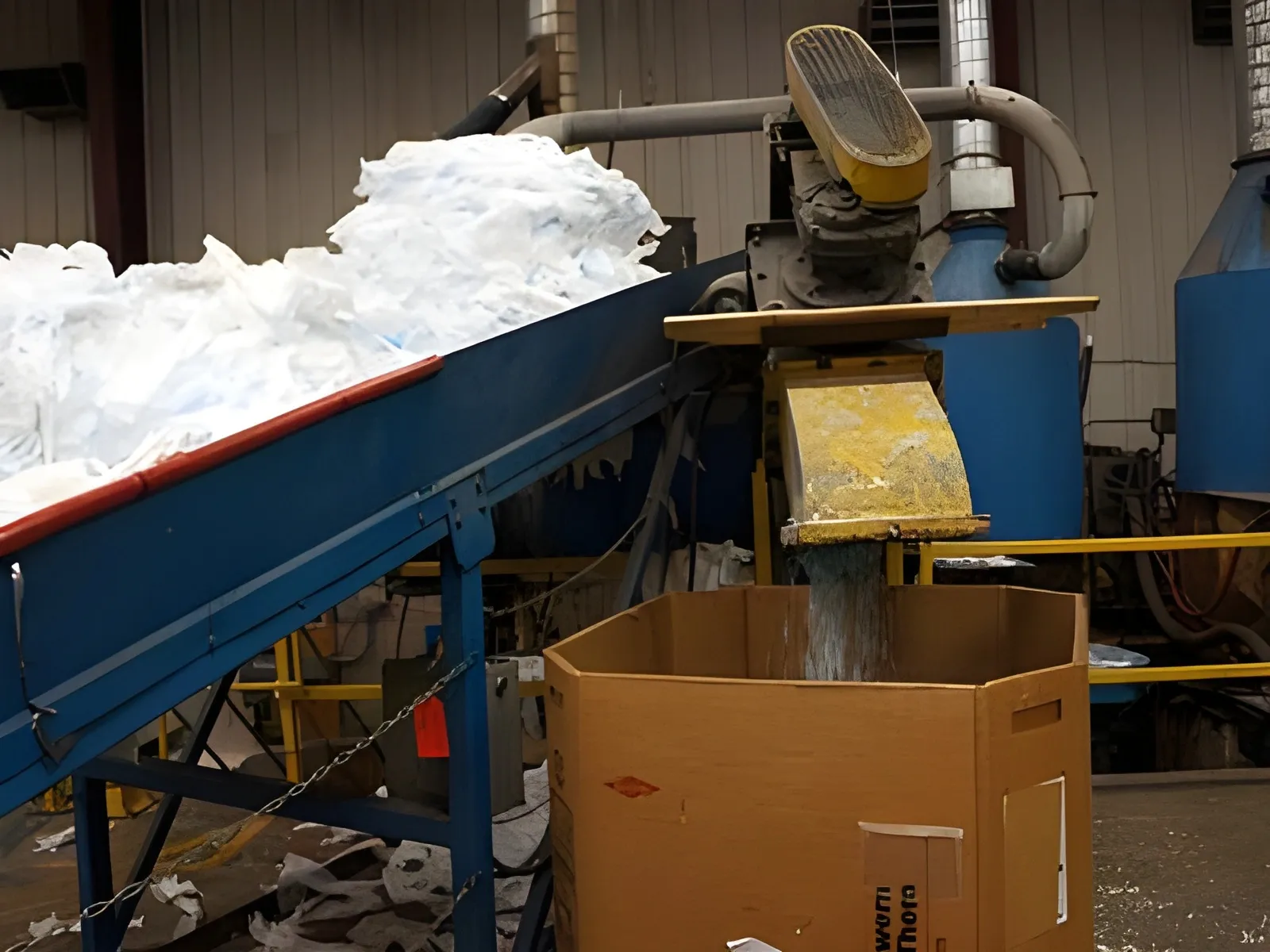
When people ask why so little plastic actually gets recycled, the honest answer is that not all plastic waste is the same problem. The bottle in your kitchen bin and the off-spec run coming off a factory line are both "plastic," but recycling them are two very different jobs. One is genuinely hard. The other is something we do every day.
At EPL Plastics, we focus on the side of the problem that works: industrial plastic. Understanding why it works helps explain why it also holds part of the answer to the side that doesn't.
The Numbers Say It All
Globally, only about 9% of plastic waste is recycled (OECD). Most of that failure sits on the consumer side, where the waste is mixed, dirty, and scattered across millions of households. Researchers point to the same culprits again and again: incompatible polymers, contamination, and packaging that was never designed to come apart (npj Materials Sustainability).
Break the problem into its three stages and it becomes clear why consumer recycling struggles where industrial recycling doesn't.
Collecting It Is the First Hurdle
Consumer plastic shows up in tiny amounts, everywhere. A yogurt cup here, a shampoo bottle there, spread across a whole city. Getting it back means kerbside bins, trucks, transfer stations, and a lot of fuel and labour to gather material that is worth very little per piece. A huge share never makes it into the system at all, and what does arrives mixed together.
Industrial plastic is the opposite. It comes from one place, in volume, and predictably. A single plant might generate several tonnes of the same material every week, already gathered in one location. There is no scavenger hunt, just a known, steady supply.
Then It Has to Be Cleaned
This is where a lot of consumer plastic quietly falls out of the loop. Food residue, liquids, labels, adhesives, and coatings all contaminate the material, and if a batch is too dirty it gets rejected and sent to landfill or incineration anyway (npj Materials Sustainability). Washing it is possible, but it costs water, energy, and money, often more than the recovered plastic is worth.
Industrial waste usually skips this problem. Trim, purgings, off-spec parts, and production scrap are typically clean to begin with, because they never held food or sat in a bin. That alone removes the single biggest reason recycling fails.
And Sorting Is the Hardest Part
Even clean plastic has to be separated by polymer type before it can be reprocessed, because different plastics melt and flow differently and don't mix well. Post-consumer waste is a jumble of PET, HDPE, PP, PS, and multilayer packaging that fuses several materials, and sometimes metal or paper, into a single film that cannot be pulled apart (ACS Applied Polymer Materials). Sorting all of that accurately is slow, expensive, and never perfect.
Industrial plastic is usually a known quantity. A manufacturer knows exactly what resin their scrap is, often a single grade of polypropylene, polyethylene, or polystyrene, because they bought it that way. When the input is already identified and consistent, the hardest step in recycling becomes the easiest.
Why Industrial Recycling Is Part of the Bigger Fix
It would be easy to read all this as "industrial good, consumer hopeless." It isn't. The point is that industrial recycling is where the capability gets built, and that capability is what consumer recycling has always lacked.
Every tonne of industrial plastic that gets recovered funds and refines the same machinery, techniques, and end markets that harder streams eventually need: better sorting and washing, cleaner reprocessing, and steady demand for recycled material. It also proves the economics work, which is what pulls investment into the infrastructure. A recycler that runs reliably on clean industrial feedstock is far better positioned to take on the messier material as sorting and cleaning technology improves.
In other words, getting the easy stream right is how the industry earns the tools to eventually tackle the hard one. Growing demand for recycled content ties the two together, and moves the whole system toward a circular model instead of the landfill.
How Our Business Model Works, and Why Consumer Plastic Doesn't Fit It Yet
Recycling only happens at scale when the economics work, and for industrial plastic they do. The EPL Plastics model is a closed loop that pays for itself: we buy clean, sorted industrial scrap from manufacturers, reprocess it into consistent repurposed material, and sell it back into production. Because the feedstock arrives clean, in volume, and as a known resin, the cost of collecting, cleaning, and sorting it is low enough that the recovered material is worth more than the effort to recover it. That margin is what keeps the whole thing running, and it's why the manufacturer, the recycler, and the environment all come out ahead.
Consumer plastic can't close that same loop yet, because every step costs more and returns less. Collection is spread thin, cleaning is expensive, and sorting a mixed, contaminated stream eats up any value the material had left. By the time a used yogurt cup is collected, washed, and separated, you've often spent more than the recycled plastic is worth, so it goes to landfill instead. The problem isn't that consumer plastic can't be recycled. It's that, right now, the numbers rarely add up.
That's exactly why the industrial side matters. Every clean tonne we process builds the scale, the equipment, and the end markets that slowly push those numbers in the right direction, until the economics that already work for industrial plastic start to reach the consumer stream too.
How EPL Plastics Fits In
EPL Plastics is a family-owned industrial plastic recycling company based in Brantford, Ontario, serving manufacturers across Canada and the northern United States. We handle the full recycling process in-house, so your industrial plastic waste becomes high-performance repurposed material rather than landfill:
- Recycled material sourcing and toll plastic processing
- Plastic grinding and granulating, densifying, and pelletizing
- Aspiration and blending and compounding into custom, spec-ready material
For manufacturers, that means the plastic waste you generate doesn't have to be a disposal cost. EPL Plastics can recover it, reprocess it, and often turn it into a genuine margin gain instead of a rising landfill bill. And every tonne handled this way strengthens the recycling system everyone depends on.
Take Action: Put Your Clean Stream to Work
If your operation produces consistent, uncontaminated plastic waste, it is exactly the kind of material that recycles well, and it is being wasted every time it goes to landfill. See what you're currently spending to landfill it with our Plastic Savings Calculator, then talk to EPL Plastics about turning it into value instead of a disposal cost.
FAQ: Consumer vs. Industrial Plastic Recycling
Q: Why is consumer plastic so much harder to recycle than industrial plastic?
A: Consumer plastic is collected in tiny amounts from millions of places, contaminated with food and labels, and mixed across many polymer types and multilayer packaging. Industrial plastic arrives in volume from one source, is usually clean, and is often a single known resin, which makes every step easier.
Q: What are the three biggest challenges in recycling consumer plastic?
A: Collecting it efficiently, cleaning off contamination, and sorting it accurately by polymer type. Any one of these can make a batch uneconomic and send it to landfill.
Q: Does investing in industrial recycling actually help consumer recycling?
A: Yes. Industrial recycling builds and funds the sorting, cleaning, and reprocessing capability, and the end markets for recycled material, that the harder consumer streams need to become viable.
Q: Which industrial plastics recycle best?
A: Clean, single-grade Polypropylene (PP), Polyethylene (PE), and Polystyrene (PS) are ideal, which is exactly what most manufacturing scrap and off-spec material already is.
Q: Where can manufacturers recycle industrial plastic waste in Canada and the northern U.S.?
A: EPL Plastics is a family-owned industrial plastic recycling company in Brantford, Ontario, working with manufacturers across Canada and the northern United States. We buy, process, and repurpose industrial plastic waste, and can quote what your material is worth, contact us to get started.